
Are Ballot Initiative Committees the New Normal in Massachusetts?
The 2026 election cycle has brought an unprecedented surge in ballot initiative activity to Massachusetts. With 47 petitions filed, 11 certified to advance, and one already guaranteed a spot on the ballot, voters may face one of the most consequential ballot question elections in recent memory.
Translation: Your November ballot is about to get very, very long.
The Numbers: A Historic Filing Year
In August 2025, the Massachusetts Attorney General's Office received 47 initiative petitions from 19 groups—42 proposed laws for the 2026 ballot and 5 proposed constitutional amendments for 2028. Industry observers have characterized this as a record number of filings for a single cycle.
As of early January 2026, 11 proposals delivered the required 74,574 certified signatures before the December 3, 2025 deadline. Additionally, one statewide ballot measure—a referendum calling for the repeal of the 2024 gun law—has been certified for the November 3, 2026 ballot.
What's Advancing: The 11 Certified Petitions
The initiatives cover a diverse range of policy areas:
Reduce the state's personal income tax rate from 5% to 4%
Limit how much revenue the state can collect in a given year
Establish statewide rent control
"Legalize starter homes" by allowing single-family homes on 5,000-square-foot lots
Subject most records of the Governor and Legislature to the public records law
Reform the Legislature's stipend system
Enable Committee for Public Counsel Services employees to unionize
Direct funding from the sporting goods sales tax to conservation
Roll back recreational cannabis use regulations
Implement all-party state primaries (top-two primary system)
Allow people to register and vote on Election Day
For a more in depth review of how the ballot process works, read up on the Massachusetts Ballot Questions 2026 blog we put out.
The Special Committee: A New Approach to Initiative Review
Here's where things get interesting.
Massachusetts operates under an indirect initiative system, which means the Legislature plays a crucial role before anything reaches the ballot. All 11 certified petitions have been filed as bills with the House Clerk's office, and the Legislature has until May 5, 2026, to consider and act on them. On the other hand, a direct initiative system is one in which successful petitions go straight to the ballot without legislative involvement.
On February 5, 2026, the Legislature created a special 10-person joint committee dedicated to reviewing all 11 initiative petitions. This marks the second consecutive cycle using this approach—a significant shift in how Massachusetts handles ballot questions.
Historically, the Legislature handled initiative petitions through its regular committee structure, routing measures to subject-matter standing committees based on their content. A tax initiative would go to the Revenue Committee, a housing measure to Housing, and so on.
The shift began in 2024, when lawmakers created a dedicated panel to review all ballot measures uniformly. The committee held hearings and provided a centralized forum for debate—but ultimately took no action, allowing all measures to proceed to the ballot.
Now, in 2026, the Legislature is repeating the model. Whether this represents a new norm or simply a way to manage a busy cycle remains to be seen.
The committee composition is as follows:
Representative Alice H. Peisch (D - Wellesley)
Representative Kate Hogan (D - Stow)
Representative Frank A. Moran (D - Lawrence)
Representative Michael S. Day (D - Stoneham)
Representative David T. Vieira (R - Falmouth)
Senator Cindy F. Friedman (D - Arlington)
Senator Brendan P. Crighton (D - Lynn)
Senator Paul R. Feeney (D - Foxborough)
Senator Barry F. Finegold (D - Andover)
Senator Ryan C. Fattman (R - Worcester and Norfolk)
Why This Matters
The very existence of this committee highlights what makes Massachusetts unique. In the 19 states with direct initiative processes—including California, Colorado, and Oregon—successful petition drives automatically place measures on the ballot without legislative involvement.
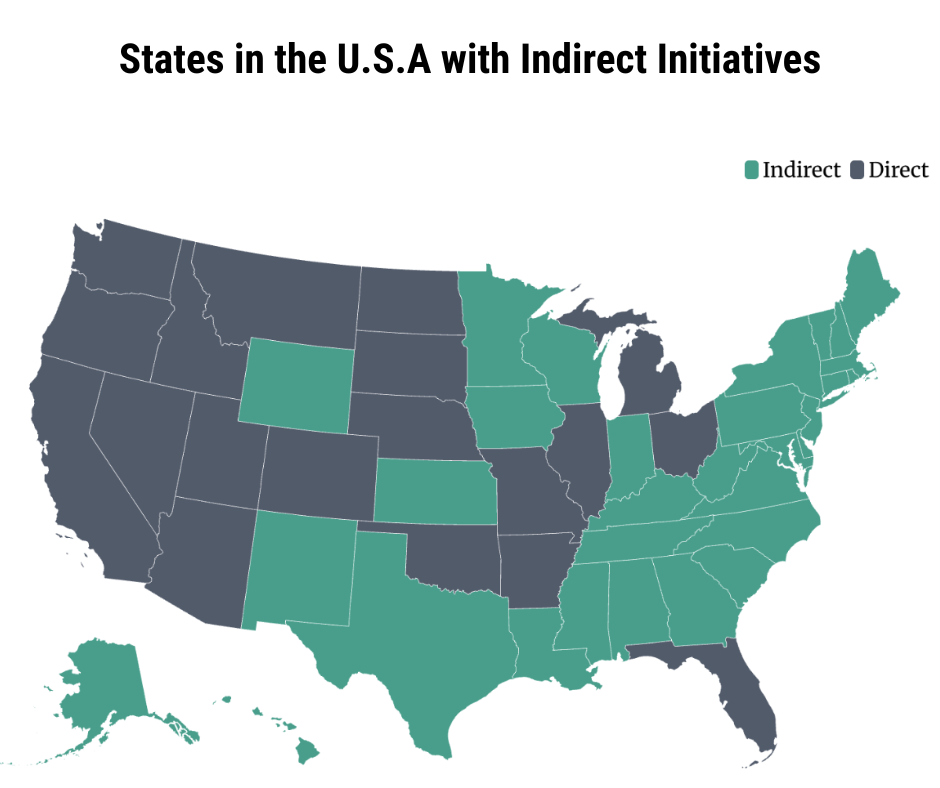
Massachusetts is one of only a handful of states using an indirect system. The Legislature has four options for each petition:
Adopt the measure directly - The proposal becomes law without appearing on the ballot
Offer an alternative to the measure - The proposal comes onto the ballot with a proposal offered by the Legislature
Take no action or reject the measure - Proponents must then gather an additional 12,429 signatures to place the question on the ballot in November
Negotiate a compromise - The Legislature can work with proponents to pass a modified version
However, the 2024 precedent—where a similar committee was formed but lawmakers ultimately chose not to act—raises questions about whether this will result in legislative action or serve primarily as a forum for discussion.
Among other indirect initiative states like Maine and Michigan, the use of a special consolidated committee appears uncommon. Most states handle initiatives through their regular legislative processes without creating dedicated bodies, making Massachusetts's approach distinctive.
Historical Context
Massachusetts voters have decided on an average of 3.4 ballot measures per election over the past ten cycles. If all 11 certified petitions for 2026 survive legislative review, the ballot could feature as many as 12 questions—more than triple the historical average.
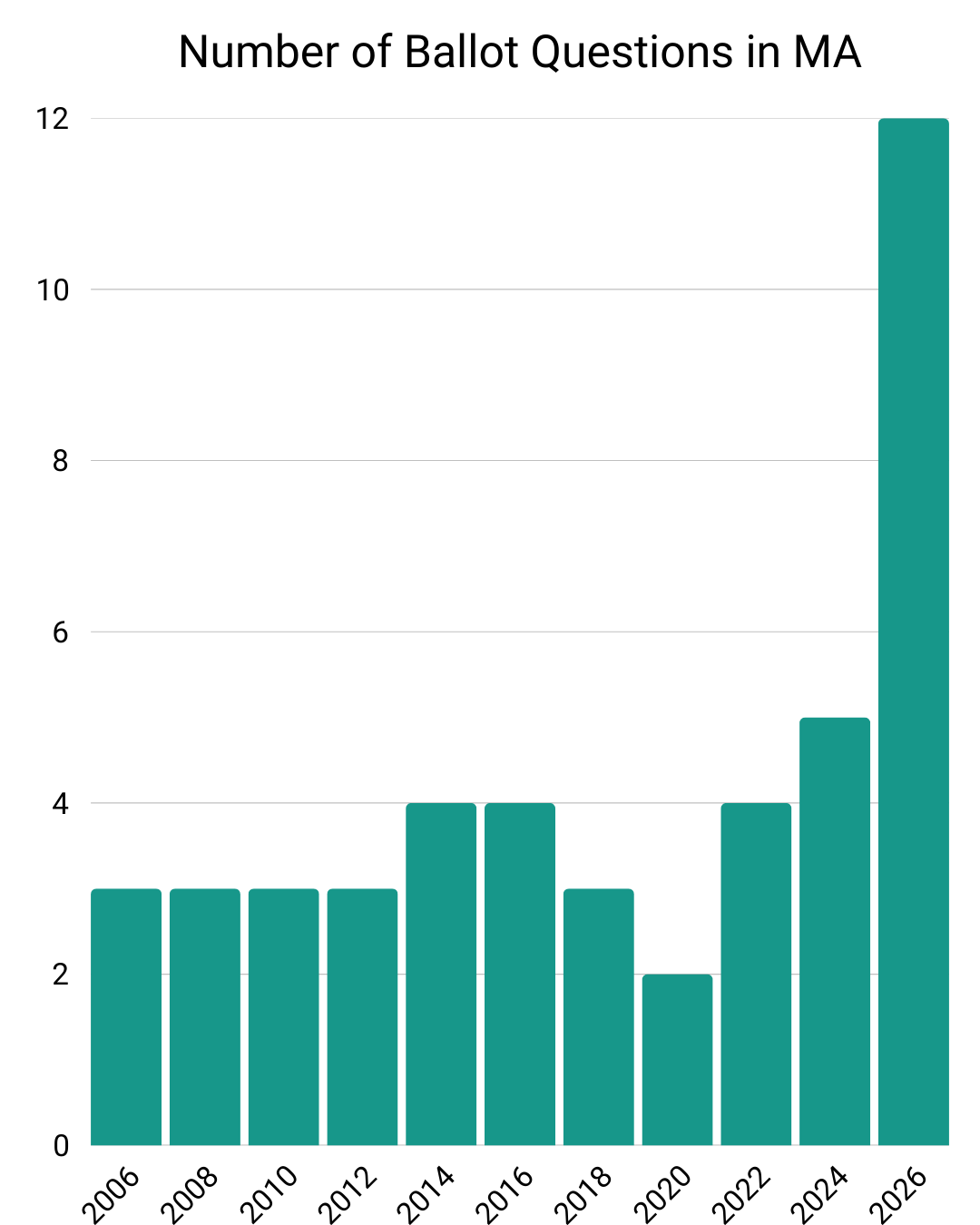
Between 1910 and 2024, Massachusetts voters decided on 231 ballot measures, approving 161 (69.7%) and defeating 70 (30.3%). However:
This disparity makes the Legislature's decision whether to adopt, modify, or ignore initiatives consequential—not just for whether measures appear on the ballot, but for their ultimate chances of success.
What's Next: The Road to November 2026
The timeline ahead:
February 2026: Legislature names committee members
May 5, 2026: Deadline for the Legislature to act on certified petitions
June 17, 2026: Deadline for proponents to submit second round signatures if their initiative doesn’t get legislative backing
November 3, 2026: Election Day
Between now and May, expect vigorous lobbying on Beacon Hill. If the Legislature follows the 2024 precedent and declines to act, all 11 measures would proceed to the second signature-gathering phase.
The battle lines are already forming. The rent control measure has drawn opposition from the real estate industry while housing advocates have mobilized support. Tax reduction proposals have generated support from business groups while facing skepticism from those concerned about state revenue. The government transparency initiatives present a particular challenge for legislators being asked to impose new rules on themselves.
Staying Informed Through the Process
With up to 12 ballot questions potentially heading to voters, keeping track of committee hearings, legislative debates, and final outcomes will be crucial for Massachusetts residents, advocacy groups, and local officials alike. See our report on what initiatives have bills filed (updated in real-time).
And what better way to keep track than with MassTrac!